

Artificial intelligence is transforming the workplace faster than ever before, leaving many leaders wondering what skills will matter most in the years ahead. While much of the conversation focuses on whether AI will replace jobs, I believe the more important question is this: How do we stay relevant as leaders in an AI-powered world?
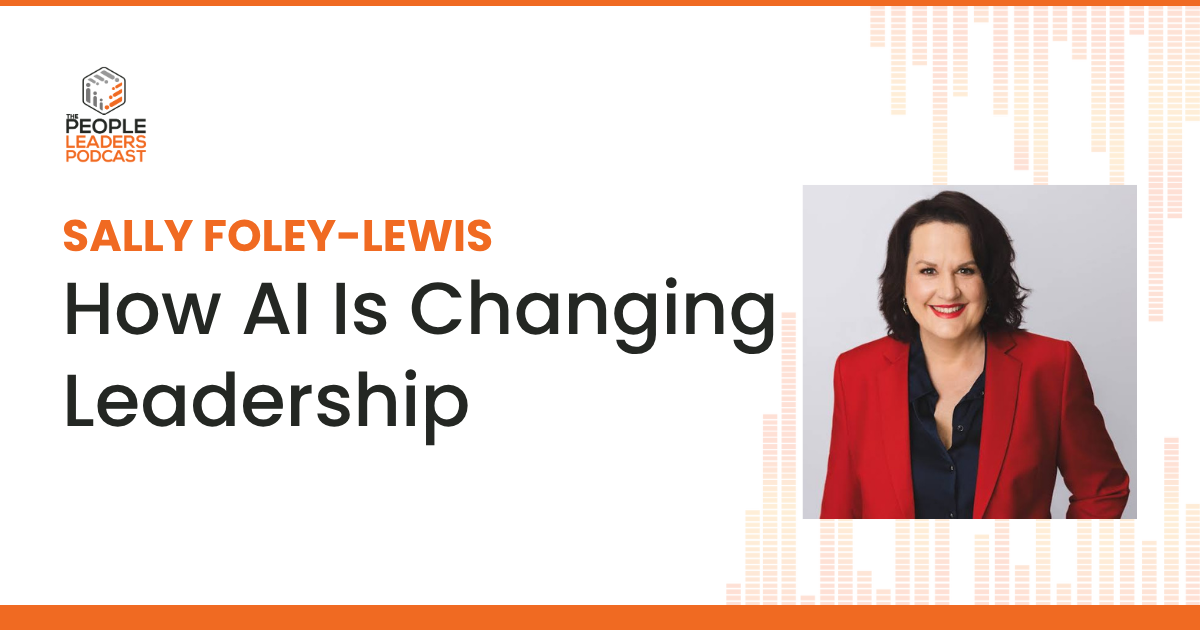
In this episode, I sat down with leadership expert Sally Foley-Lewis to explore how AI is changing leadership, why emotional intelligence and sound judgement matter more than ever, and what leaders can do to help their teams embrace AI without losing the very qualities that make us human.
You can watch here, or listen here, or read the summary below.
Get Notified Of Future Episodes Email | Apple Podcasts | Youtube | Podcast Index | Amazon Music | Podcast Addict | Podchaser | Pocket Casts | Stitcher | Subscribe on Android | Player.fm | Listen Notes | RSS | Spotify
How AI Is Changing Leadership
Before recording this conversation, I surveyed our listeners to understand their biggest concerns about AI in the workplace. What stood out was that people weren't necessarily fearful of AI replacing them overnight. Instead, they were questioning whether they would still bring value if AI became part of every decision-making process.
Sally shared a fascinating observation from her work with organisations around the world. She has noticed that some employees are becoming so reliant on AI tools that they're beginning to doubt their own expertise. Rather than bringing their own thinking to meetings, they feel compelled to check everything with AI first, almost outsourcing their confidence along with their ideas.
This shift is subtle but significant. The real danger isn't AI replacing human intelligence; it's people gradually losing trust in their own judgement. Experience, intuition and professional wisdom still matter. In fact, as AI becomes more capable, these qualities become even more valuable.
Navigating AI in the Workplace
One of the biggest mindset shifts leaders need to make is recognising that the value we bring to work is changing.
Not long ago, leaders were often valued because they knew the answers. Today, AI can generate answers in seconds. What it cannot do is understand context, exercise discernment, make ethical decisions or build genuine relationships.
As Sally pointed out, AI can generate options, but it can't own the consequences of those decisions.
For me, this reinforced something I've believed for a long time. Self-awareness, emotional intelligence and intuitive knowing aren't becoming less important because of AI, they're becoming more important. AI can enhance these qualities, but it cannot replace them.
The role of leadership is evolving from having all the answers to asking better questions, guiding better conversations and helping people navigate uncertainty with confidence.
Why Middle Managers Matter More Than Ever
Middle managers occupy one of the most challenging positions in any organisation. They're often responsible for implementing initiatives they didn't design, leading teams through changes they had little involvement in creating, and maintaining engagement along the way.
Sally explained that senior leaders have usually been thinking about a new strategy for months before it's announced, while middle managers and their teams are only just beginning to process it.
Her advice was refreshingly simple: don't start by trying to sell AI. Start by protecting your team's expertise.
People rarely resist technology itself. What they resist is feeling devalued.
When leaders reassure their teams that AI will support their work, not replace their professional judgement, they create space for trust. From there, leaders can involve their teams in shaping how AI is used, identifying frustrations it can remove and ensuring that human oversight remains non-negotiable.
When people help design the process, they stop feeling like AI is happening to them and start feeling like they're shaping how it's used. That shift creates ownership, engagement and far greater acceptance.
Creating Behavioural Change with AI
Many organisations are investing heavily in AI training, but simply teaching people how to use a tool doesn't automatically change the way they work.
Real behavioural change happens when leaders redesign conversations, not just workflows.
Rather than asking how quickly AI can complete a task, leaders should begin asking questions such as:
Which parts of our work should humans always own?
Which tasks could AI support?
How can we make better decisions together?
These conversations encourage teams to think more intentionally about how technology complements human capability instead of replacing it.
The organisations embracing AI most successfully aren't necessarily using the most advanced technology. They're the ones creating a culture of experimentation, openly discussing AI outputs, questioning bias, continuously refining their processes and learning together as a team.
How Leaders Can Empower Teams Through AI
One of my favourite moments in our conversation came when Sally suggested a completely different way to introduce AI into a team.
Rather than beginning with technology, begin with people.
Ask your team:
Which parts of your work feel repetitive?
Where are you spending time without creating real value?
If AI gave you two extra hours every week, where would you invest that time?
These questions completely change the conversation.
Instead of focusing on efficiency alone, they invite people to think about impact, purpose and contribution. AI becomes a tool that removes low-value work so people can spend more time coaching, innovating, solving meaningful problems and building stronger relationships.
That's where genuine value is created, not through automation itself, but through what we choose to do with the capacity automation creates.
The Human Skills AI Can't Replace
Towards the end of our discussion, we explored what it really means to stay relevant in an AI-powered world.
Sally made a powerful point: relevance has always been a choice.
The people who will thrive won't necessarily be the most technically skilled. They'll be the ones who combine technology with curiosity, critical thinking, sound judgement and continuous learning.
Trust also remains foundational. Leaders who create psychologically safe environments where people feel comfortable experimenting, asking questions and learning from mistakes will build teams that continue to grow long after any new technology arrives.
One comment that particularly resonated with me was this:
“Nobody can outsource their own relevance.” - Sally Foley-Lewis
Organisations have a responsibility to develop their people, but every individual also has a responsibility to continue learning, asking better questions and actively contributing their unique human strengths.
Preparing for the Future of Leadership
The biggest takeaway from this conversation wasn't really about AI.
It was about leadership.
Technology will continue to evolve, but the leaders who create trust, ask thoughtful questions, build confidence and help others think more clearly will remain indispensable.
AI may automate tasks, streamline workflows and increase efficiency, but it cannot replace courage, empathy, discernment or authentic human connection.
As leaders, our role isn't to compete with AI. It's to become the kind of leader who knows how to bring out the very best in both people and technology.
That is the opportunity in front of us, and I believe it's one worth embracing.